





Table of Contents
This post was inspired by Surena Chande’s fantastic 2021 post, which you can read here.
- Match the journalist’s beat and recent coverage. Review their latest 10 headlines and frame the pitch in the style and subject areas they already cover.
- Put the story or strongest statistic first. Subject lines that state the finding outperform those that tease it, and numbers appearing in the first three words earn the highest open and reply rates.
- Use concrete, easy-to-picture details. Name the person, place, ranking, or result; when the math is clean, a ratio such as “2 in 5” is often more compelling than a percentage.
- Add one accurate bracketed tag. Labels such as [Data], [Expert], or [Exclusive] quickly tell journalists what the pitch contains, but only use [Exclusive] for a genuine exclusive.
- Aim for a 9–13-word, front-loaded subject line, and send only to journalists whose format, industry, and timing fit the story.
- Don’t forget to test!
Over the years, I’ve found many misconceptions about writing subject lines while reviewing OutreachLark data.
Mostly, bad practices stem from trying to copy subject-line best practices from email marketing or link-building outreach, not media pitching.
Media outreach requires a different mindset than traditional email marketing.
After analyzing 148,000 pitches and over 39 million emails (and stripping out any link-building outreach), and another 6 million emails for another study, I published data studies on the topic: subject line study and our email phrasing study.
I’ve also interviewed over 100 podcast guests, including many of the top digital PR minds in the space.
In this post, I’ll walk you through the steps to writing an email subject line based on my research and interviews.
1. Choose a Relevant Angle
To stand out from the noise, your subject line needs to be personally relevant for a journalist.
This means it should match the kinds of stories they cover and their beat.
How to do it:
Read the previous 10 headlines of a journalist and see what they cover and how they cover it.
Say I had a health-related story about cellphone use among adults when they wake up in the morning.
When searching for journalists in the health and wellness space, I found Sandee LaMotte, a writer for CNN Wellness:
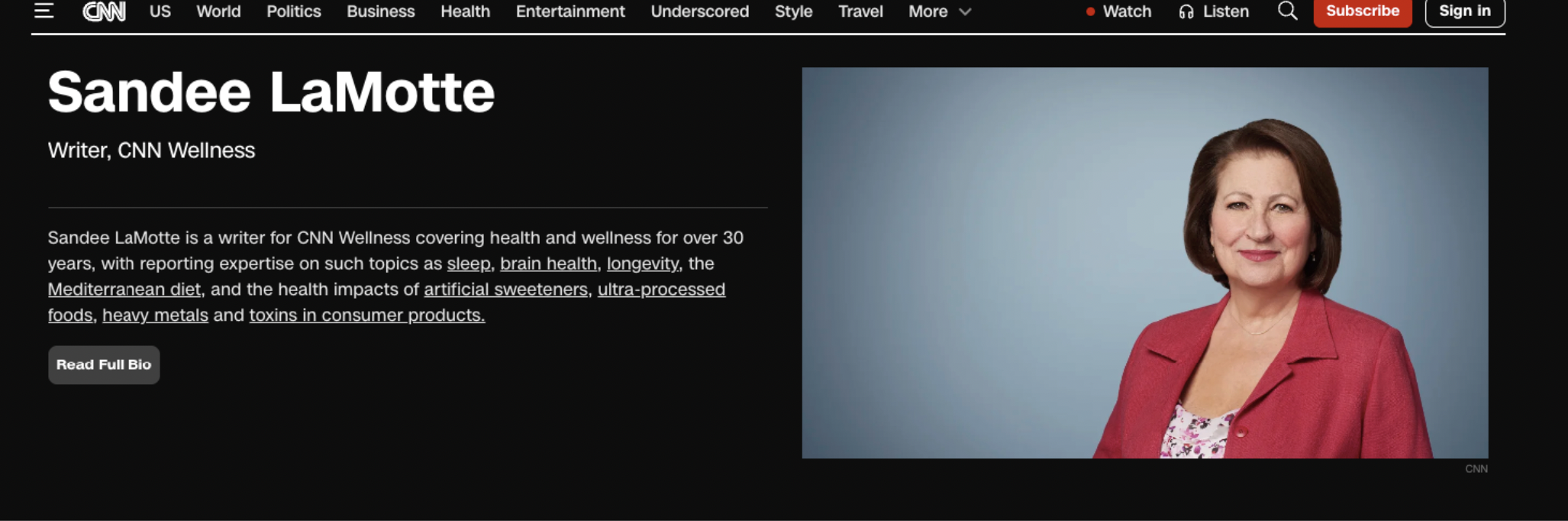
By reading her recent articles, I can see she not only covers health-related topics, but her articles focus squarely on data and research:
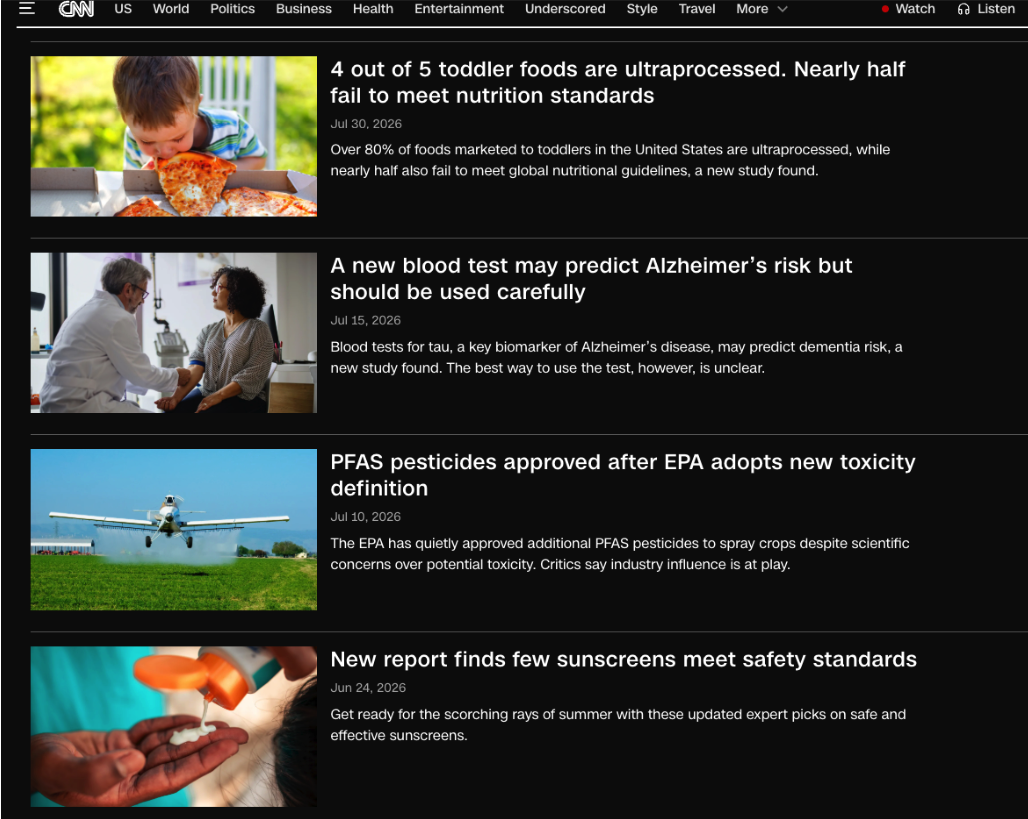
Phrases like: “4 out of 5 toddler foods”, “new report finds”, or “a new blood test may predict” tell me key information about the angle I should pitch.
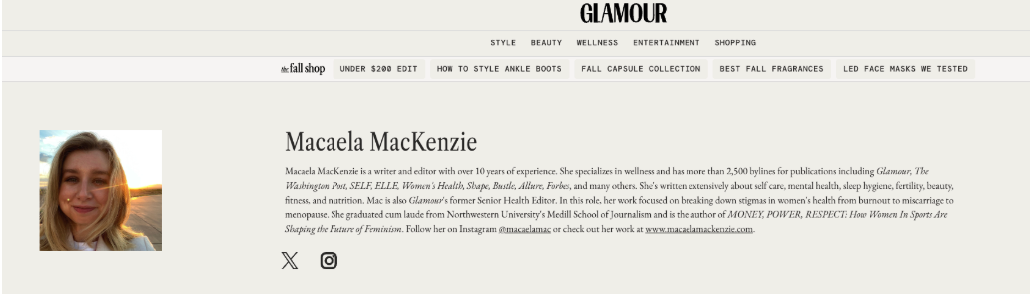
However, if I’m looking at Macaela MacKenzie of Glamour, I may decide to change my angle (or ultimately avoid pitching).
When looking at Macaela’s recent articles, her style is focused more on “best” lists and informational articles:
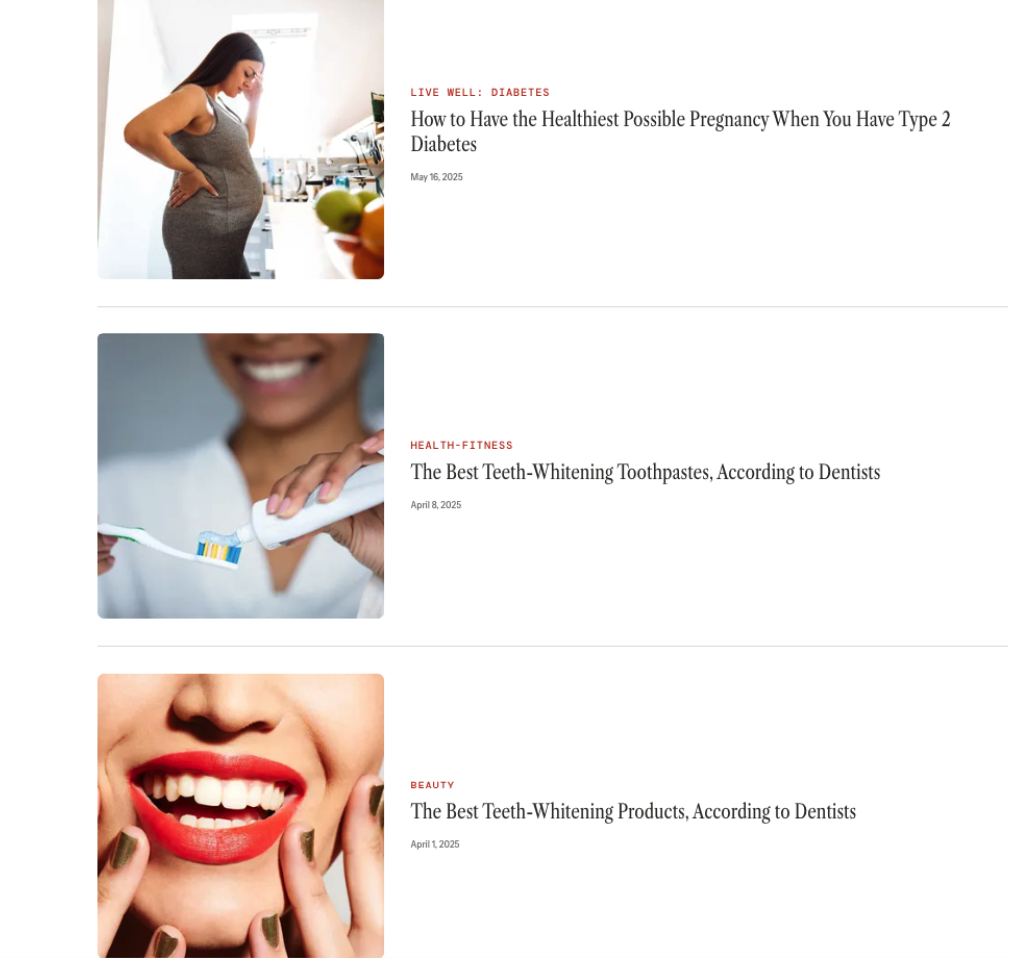
These insights help me decide what information to focus on when writing my subject line.
And as , Head of Digital PR at Aira, told me, “Matching their format also signals that you’ve actually read their work, not just scraped their email address off a database”.
2. Share the Story in the First Few Words
Getting the key story or stat across in the first few words of your subject line is the most important thing you can take from this entire post.
Although the instinct might be to craft a clickbaity subject line, journalists don’t need to play games: they want stories.
As former journalist told me, “Don’t make us dig for a story.”
Our subject line phrasing study looked at subject lines in two different ways that support this idea:
Telling beats teasing:
| Framing | Open rate | Reply rate |
|---|---|---|
| Tell — states the finding | 43.1% | 1.37% |
| Bait — teases or asks | 39.8% | 0.88% |
Front-loading beats back-loading:
| Position of first number | Open rate | Reply rate |
|---|---|---|
| Front (words 1–3) | 46.0% | 1.53% |
| Mid (words 4–6) | 38.9% | 1.21% |
| Late (words 7+) | 38.1% | 1.13% |
There’s a third, more technical reason to front-load your messages: email subject-line length limits.
Every platform, from Gmail to Outlook, displays emails differently.
Here’s a quick breakdown:
| Device / Client | View | Character limit | Avg words |
|---|---|---|---|
| Gmail app (iPhone / Pixel) | Mobile | 37 | ~6.2 |
| Gmail (browser) | Desktop | 88 | ~14.1 |
| Outlook (browser) | Desktop | 51 | ~8.5 |
The universal length before getting cut off is under 40 characters. (As you’ll see, when comparing lengths in Step 5, the line itself should run 9-13 words.)
If you are unsure what your email will look like on different platforms, use the tool below:
But, let’s walk through how you can do it yourself.
How to do it:
Write your finding as a plain sentence first. For our example, we’ll do this:
A new sleep study reveals how quickly adults reach for their phones in the morning.
The story isn’t the study; it’s the study’s finding.
So we need to dig more into the data:
A new sleep study finds 40% of adults check their phone within 5 minutes of waking
We have the data, but it needs to be front-loaded:
40% of adults check their phone within 5 minutes of waking
Now we’re getting somewhere!
3. Make it Specific
Front-loading your story only helps if it’s concrete and specific.
Being concrete helps the journalist know at a glance if the story has potential.
And our data shows a big difference.
| Concreteness | Open rate | Reply rate |
|---|---|---|
| Concrete — names the specific thing | 43.0% | 1.40% |
| Vague — a category, not a finding | 34.6% | 1.17% |
Most subject lines in our study land somewhere in the middle: not overly vague, and not overly concrete.
Take these three subject lines and look at how they change:
- Vague: Study names UK’s worst towns for speeding
- Mixed: Norwich named one of the UK’s worst towns for speeding
- Concrete: Norwich is the UK’s 2nd-worst town for speeding
Surena gave me a good example of when and why the vague subject line can fail:
“Journalists have seconds to scan their inbox for stories, and if they don’t see one emerging from your subject line, you’ve missed your shot.
Also, the ‘worst’ town or city isn’t revealed at all, so they have no idea if it’s relevant or interesting; e.g., if London’s revealed to be the worst city for speeding in the UK, it’s not likely to be as newsworthy as somewhere more obscure.”
One quick note on concrete numbers:
Not every pitch leads with stats, but when it does, making them concrete and easy to picture at a glance makes a big impact too.
Based on our data, ratios tend to perform better than percentages:
| Number format | Open rate | Reply rate |
|---|---|---|
| Ratio | 48.8% | 2.22% |
| Percentage | 42.3% | 1.61% |
You see better open rates because something like “1 in 5” is easier for a journalist to picture.
However, the denominator of a ratio can change the direction.
If you veer away from concrete ratios a journalist can easily picture, like 1 in 20 or 5 in 17, open rates can drop.
How to do it:
Look at your line and ask what a journalist could actually repeat back from it.
If they’d have to open the email to discover the core finding, you’re not there yet.
For instance, these aren’t specific enough and would require the journalist to open to find out more:
- Most adults check their phone almost immediately after waking
- 5 surprising facts about how Americans sleep
- New study reveals how fast adults reach for their phones
But if we give the details, we are closer:
40% of adults check their phone within 5 minutes of waking
Then, if your story has a number, try converting the percentage to a ratio:
If the base comes out as 2, 3, 4, 5, or 10, use it:
2 in 5 adults check their phone within 5 minutes of waking
(If it doesn’t reduce cleanly, keep the percentage or reframe in words: 42% becomes “almost half.”)
And if it would come out as “1 in 20” or “5 in 17,” stop.
Those test worse than the percentage you started with.
4. Tag It
Add a label or tag in brackets to tell the journalist what kind of pitch is inside.
Words like [Data], [Expert], [Exclusive] act as a visual cue that can trigger opens.
In our first subject line study, we found that [brackets] performed best, either front or back.
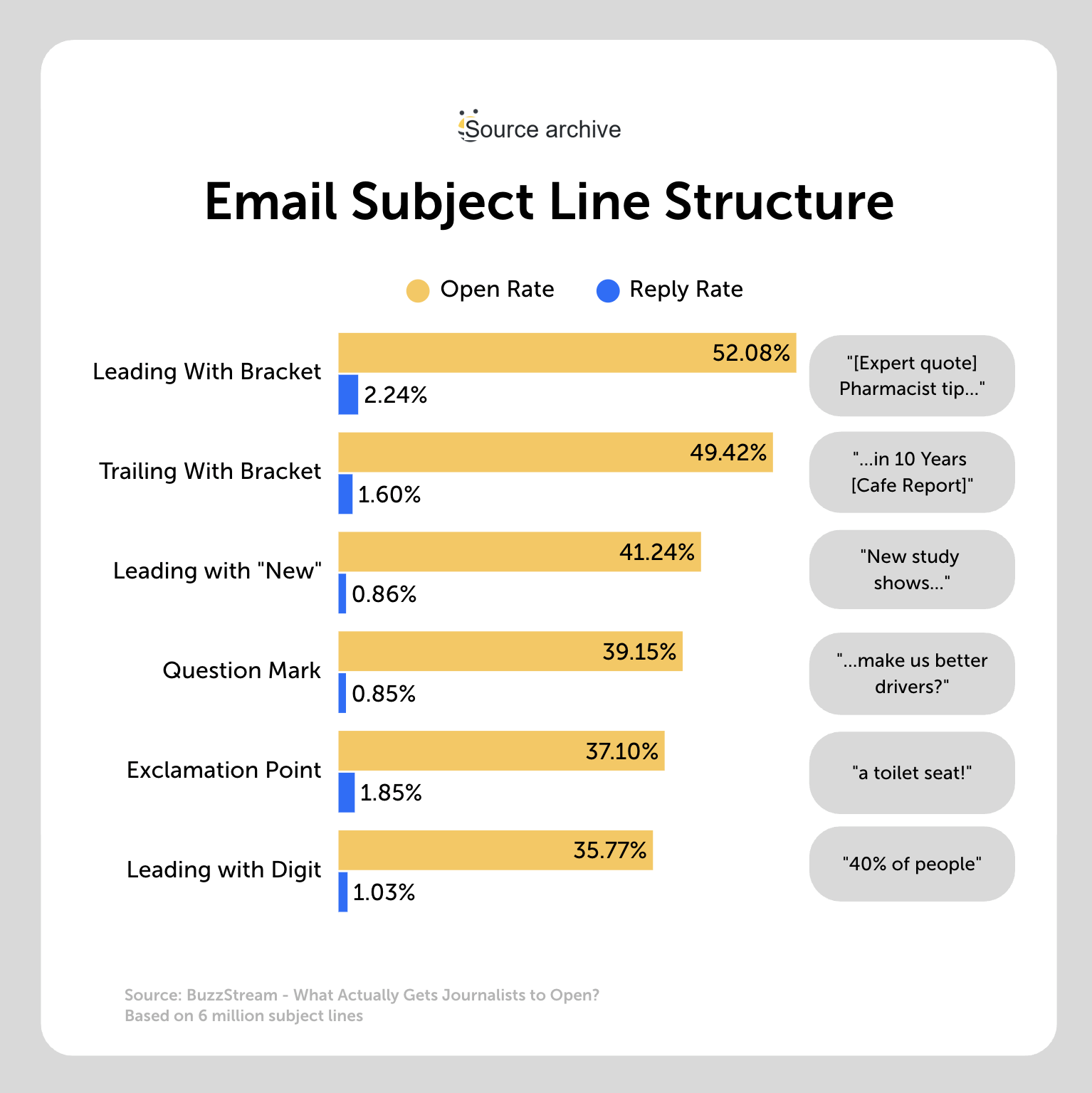
Then, out of all of the brackets, the term “[Exclusive]” in brackets performed best among the group.
This isn’t surprising, as journalists really like exclusives these days as they fight for traffic and their users’ attention.
But don’t just slap on “exclusive” if it isn’t an exclusive. That can get you into some trouble.)
As freelance journalist told me in our podcast episode, “one of the most abused words in the English language in 2026 is “exclusive” — it’s just slapped onto bloody everything.”
How to do it:
Before you write the tag, name what you’re actually handing the journalist.
It’s not what the campaign is about.
Is it a dataset? An interview? A genuine exclusive?
Pick the one word that’s true and put it in brackets at the front:
[Data] 2 in 5 adults check their phone within 5 minutes of waking
[Exclusive] 2 in 5 adults check their phone within 5 minutes of waking
5. Format It
A handful of other best practices apply to formatting, though none will kill your subject line.
Here are some important bits to know:
Title case beats sentence case
In one of our studies, we compared title case with sentence case, and while more digital PR agencies use sentence case, title case actually had more opens by 5 percentage points. (40.75% vs. 35.03%)
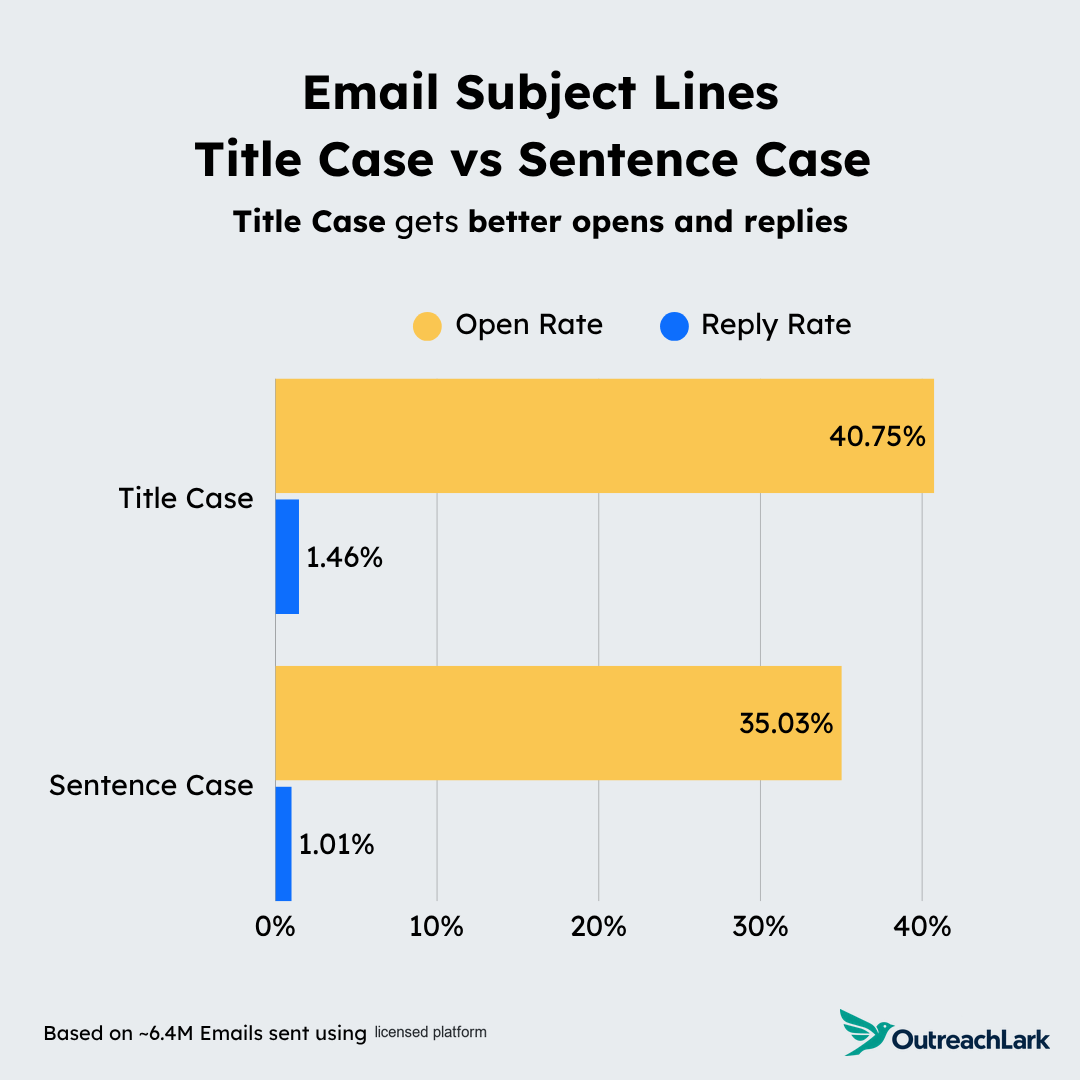
This one can feel counterintuitive because title case has long been a marketing email best practice.
I assume this works because it stands out in a sea of sentence case pitches, and perhaps it looks more like a headline.
I will caveat this one: test it!
9–13 words or 71+ characters is the sweet spot
Overall, the best total for word count for your subject line is 9-13 words.
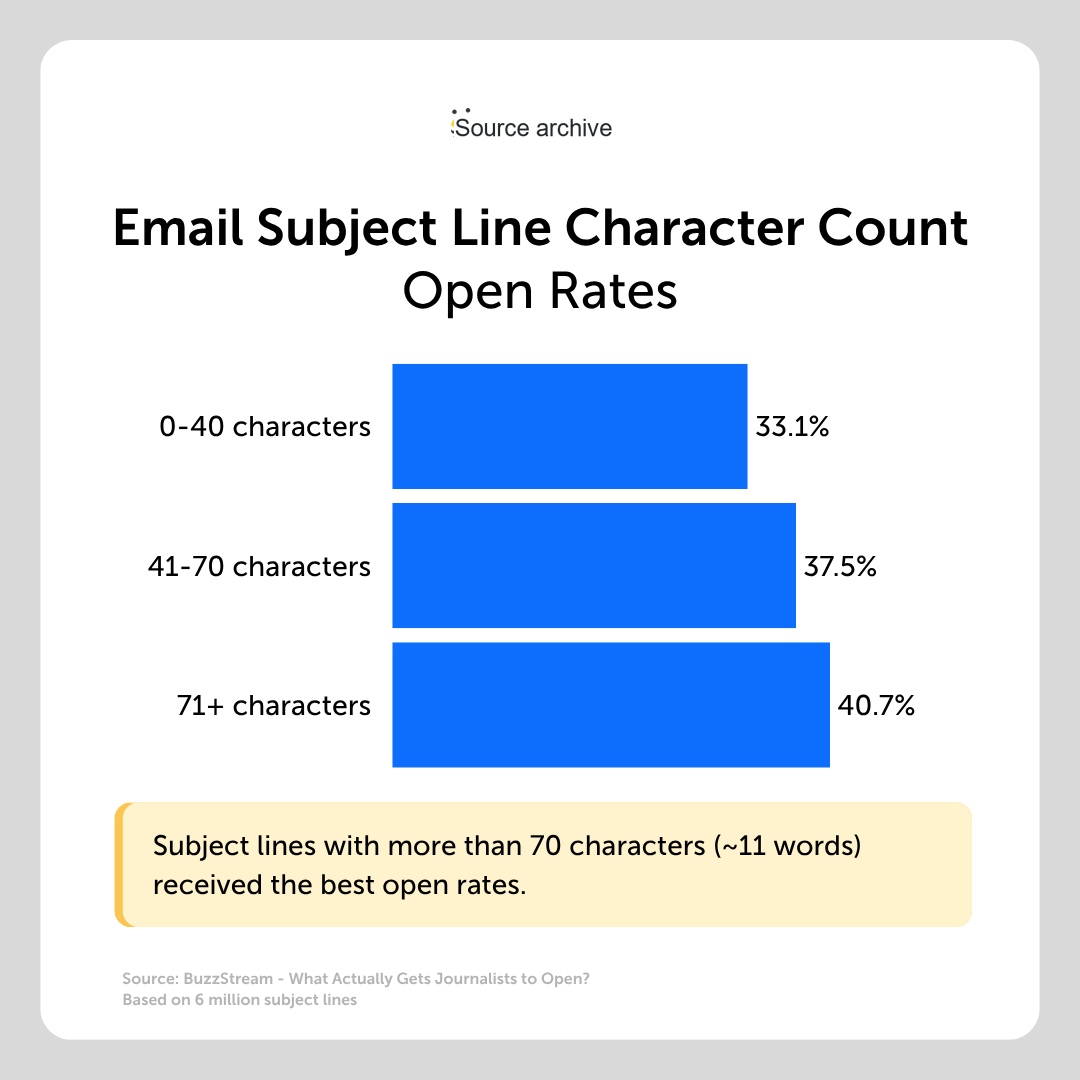
However, keep in mind step number 2: you still need to front-load the important stuff.
Don’t dumb down the reading level
We also tested reading level, and 10th grade and up outperforms simpler phrasing based on open rates.

Remember, these are journalists, not high schoolers!
How to do it:
For your final formatting pass, here is what I’d recommend.
Switch to title case: 2 in 5 Adults Check Their Phone Within 5 Minutes of Waking
Count your words: You’re aiming for 9–13.
If you’re over or under, try adding or cutting from the back so that your hard work from step 2 doesn’t get lost:
[Data] 2 in 5 Adults Check Their Phone Within 5 Mins of Waking
Don’t oversimplify the language: these are journalists, not 6th graders.
6. Test, Test, Test
Once you’ve written your subject line, you need to test it.
Test it on yourself.
Put yourself in the journalist’s shoes.
Podcast guest Hannah Smith told me on our podcast that she writes over 20 subject lines before she settles on the right one!
Then, A/B test it in real life.
How to do it:
Put your subject line in an email and send it to your own inbox.
Then check it out on different platforms.
Then write more of them. Hand a colleague who didn’t work on the campaign a few to spot filler text or vagueness.
Then, in OutreachLark, A/B test the two best ones for real:
- In your project, go to Sequences → Templates
- Build two templates with identical body copy and different subject lines
- Send each to an equally sized set of prospects
- Compare in Report
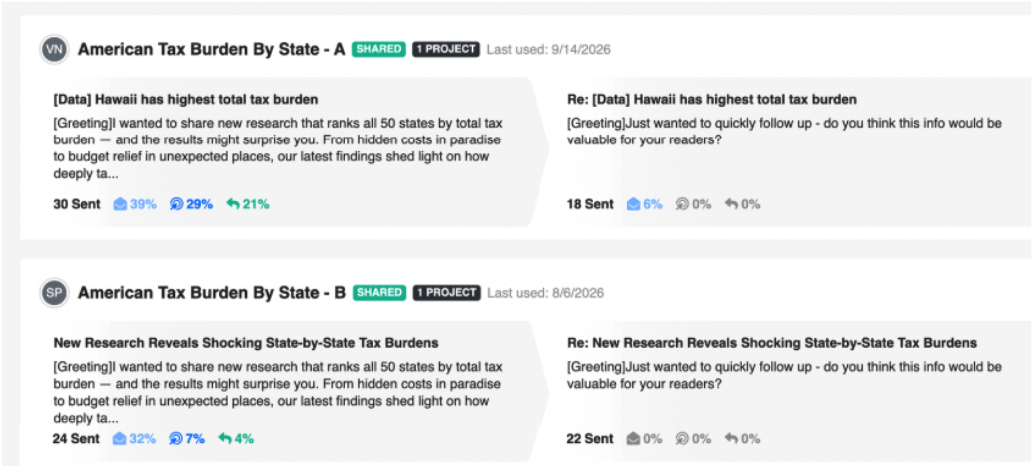
In the screenshot above, we can see how much better subject line A: “[Data] Hawaii has highest total tax burden” (39%) is compared to subject line B: “New Research Reveals Shocking State-by-State Tax Burdens”.
The first is a more concrete, simple subject line that gets straight to the point.
The second is more click-baity and most likely doesn’t stand out in an inbox.
To see it in action, check out how Embryo used A/B testing to boost their campaign’s ability to get over 70 links.
No Subject Line Survives a Bad Media List
The best email pitch emailed to the wrong person will never get you coverage.
In our study of over 31 million emails, a smaller, more relevant email list outperformed the larger spray-and-pray method:
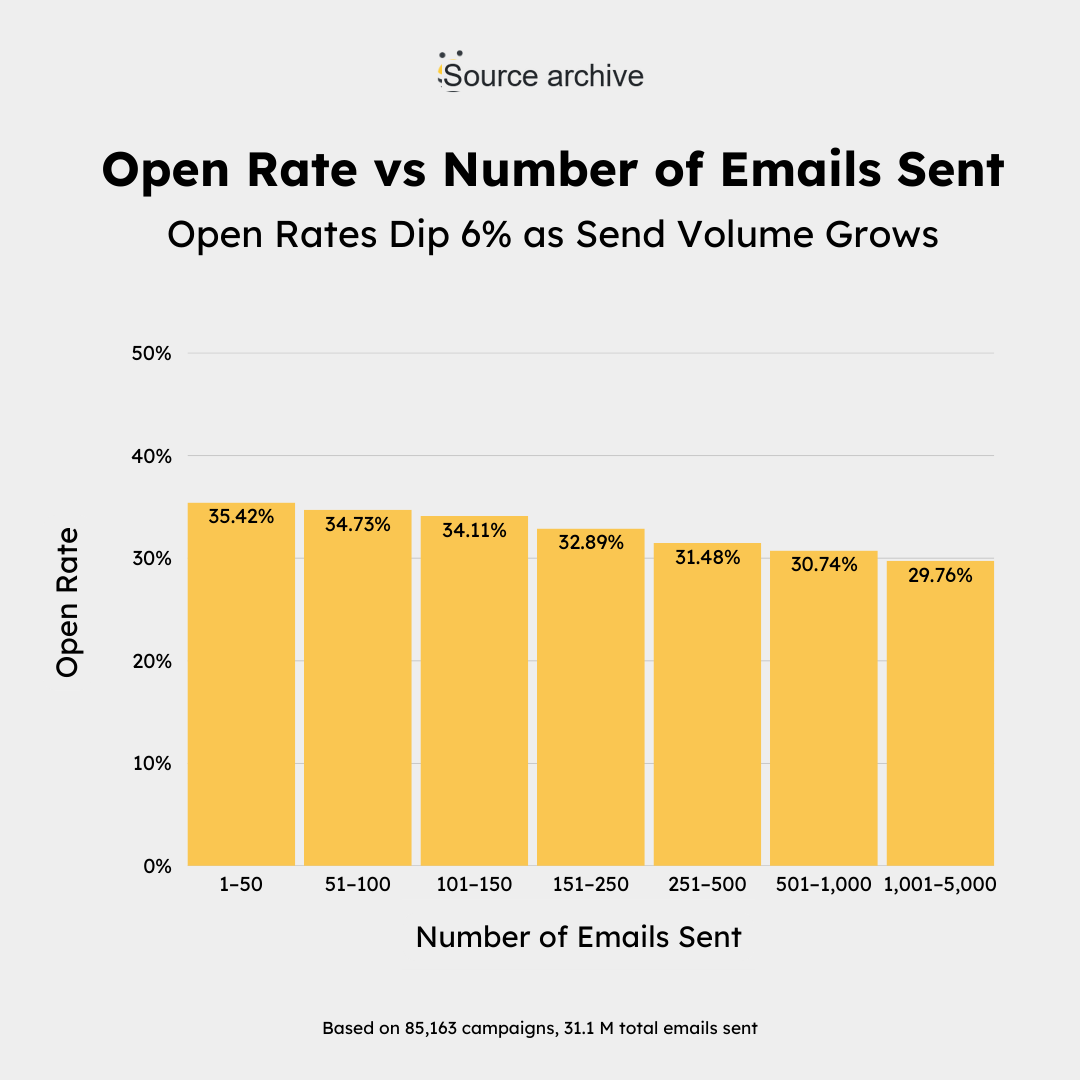
Why?
Because journalists don’t have time for your unrelated emails.
Both Muck Rack’s State of Journalism 2026 and Cision’s State of the Media 2026 reported that journalists ignore non-relevant pitches.
And they certainly get a ton of unrelated pitches.
Ella Delancey Jones, freelance journalist, told us, “I would say a large majority, around 80–85% (of the emails in my inbox), are not relevant.”
We’ve written extensive guides on finding the right journalist, but it comes down to an acronym I refer to as F.I.T.:
- Does the journalist match your pitch format?
- Do they match the industry?
- Is the timing right?
If you can nail those, the subject line game becomes a lot easier.
As always, good luck out there!



 Check out the OutreachLark Podcast